Skip to product information
1 of 3

Welttisch : First cooperation partner Finca "La Mejorana"

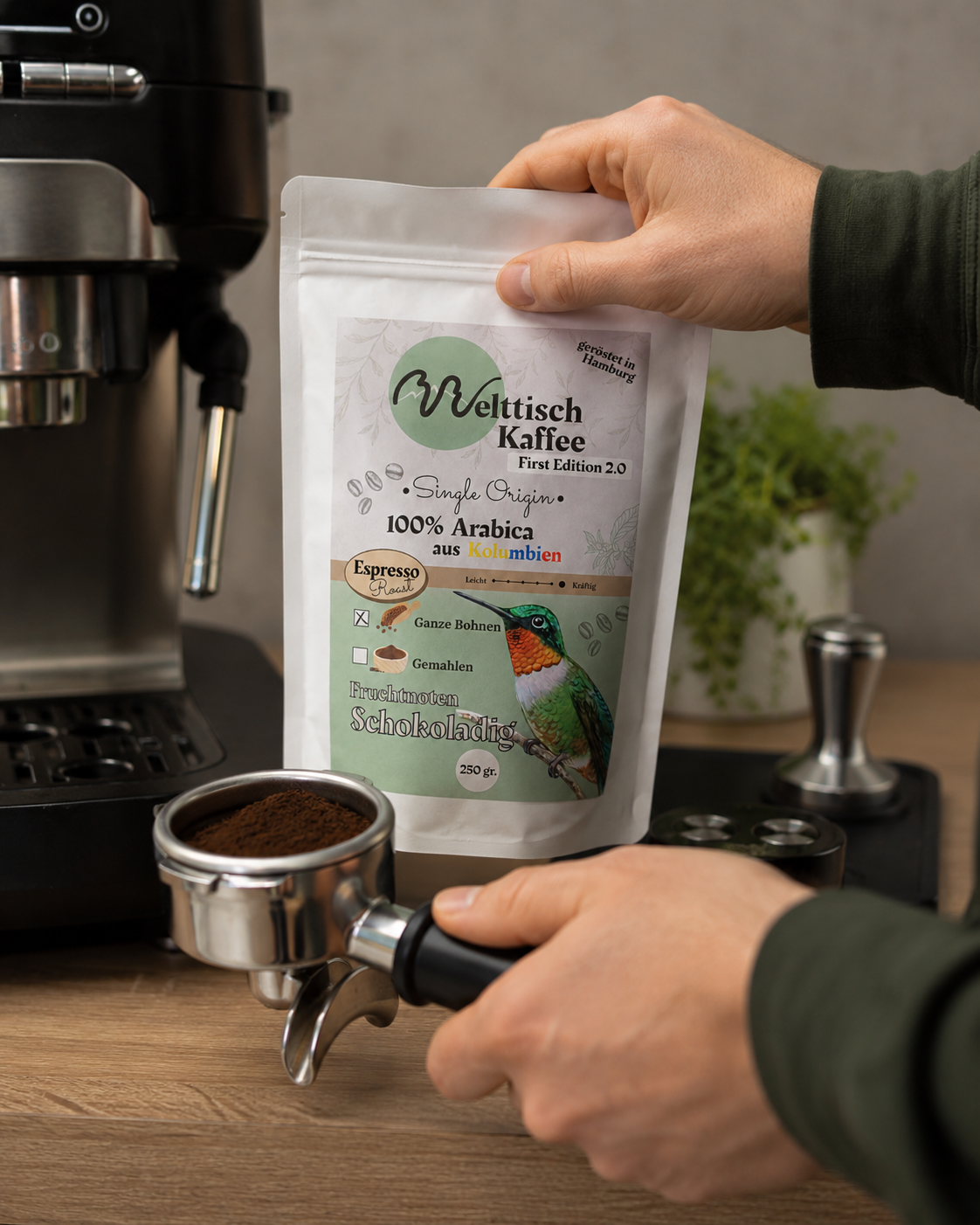
Colombian Coffee: World Table First Edition

In collaboration with our first regional partner in Quindio, Colombia, we present our first product as a result of German-Colombian friendship. It is the first step in our mission to help the coffee farmers in our region: A hand-picked coffee, matured in the shade of ancient trees in the Andean region of Colombia at an altitude of 1,400 m. Cultivated by experienced farmers in the 5th generation, run by "Tio Carlos" (Uncle Carlos) on the "La Mejorana" finca. Roasted to perfection in a traditional Hamburg roastery using a gentle drum roasting process for a full-bodied taste. Low in chlorogenic acid due to the long roasting process and therefore easy to digest. Everything for your moment of pleasure.

Size

Free shipping for orders over 50 €!

As a small business owner within the meaning of Section 19 Paragraph 1 of the VAT Act, no sales tax is charged.

Regular price
€21,48
Regular price
€21,48
Sale price
€21,48
Unit price
€42,96  per  kg
Origin: Colombia, Finca “La Mejorana”

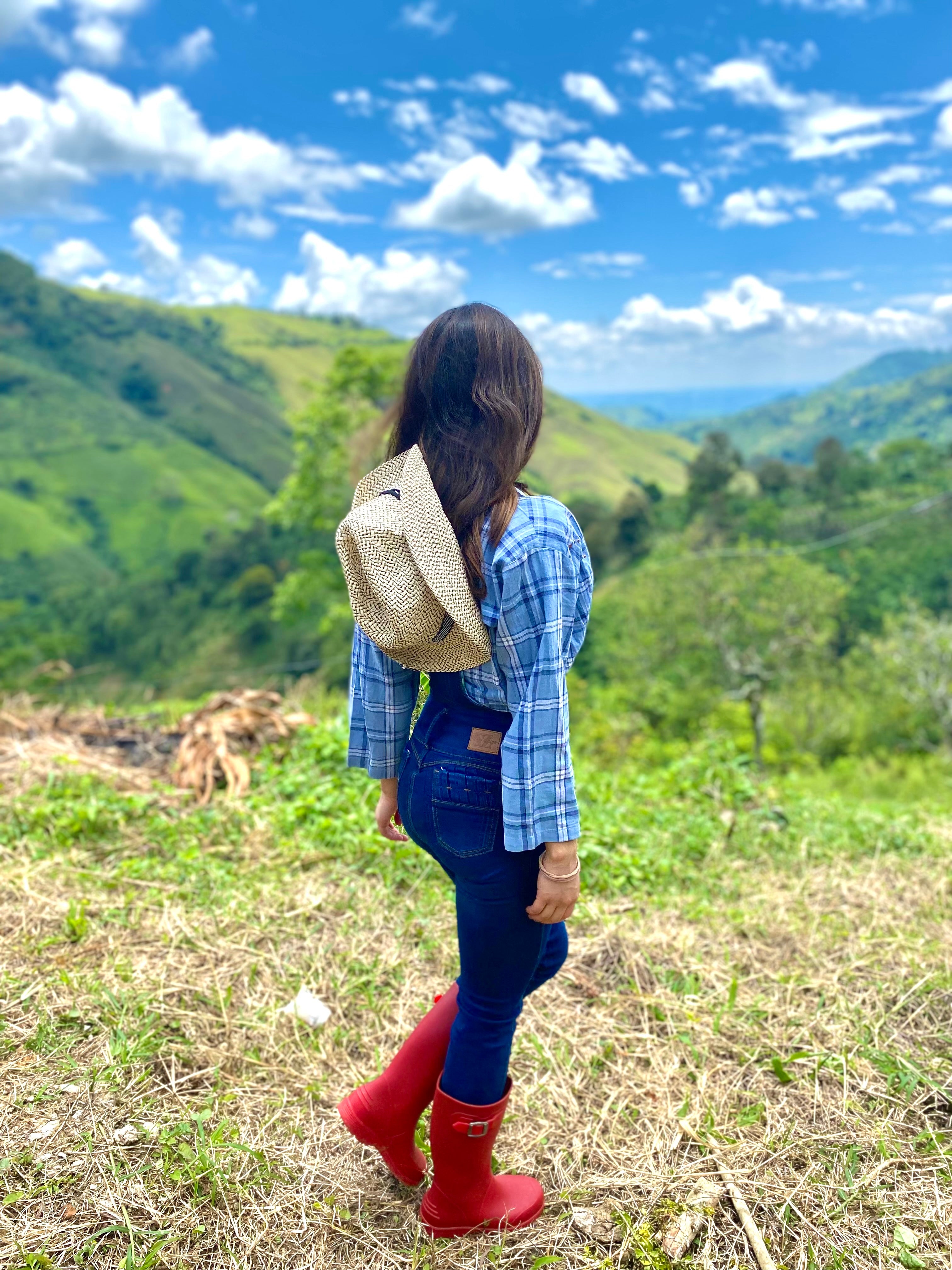
The coffee plantation Finca La Mejorana is located in the coffee zone, in the district of "Quindio". The cultivation altitude is 1,400 m above sea level.

Type: 100% Arabica, Castillo variety

Castillo is a subgenus of Coffea Arabica of Colombian origin. It can be found on many fincas where quality is important. The reason is the fine flavor profile and the increased resistance to diseases. This resistance enables more sustainable cultivation through the reduced use of pest control.

Condition: Washed

This processing method separates the coffee cherry from the kernel, leaving a layer of sugar around the kernel. The kernels are stored in a water tank with the addition of fresh water, where the sugar layer ferments. This dissolves it and "washes it away". This results in a clear taste profile with more complex aromas. This process reflects the authentic, "indigenous" taste of the coffee beans in the growing region.

Whole coffee beans

Our coffee is available unground, as "whole coffee beans". Why?

1. Ground coffee loses aroma extremely quickly

2. Only grinding as needed, adapted to your preparation method, allows the aromas to develop in your cup.

Taste: fine fruit notes, chocolate finish

fine fruity notes are typical of Colombian coffee, which is mostly grown on high mountain slopes due to its geography

Soziale Verantwortung, die messbar ist

Als Besitzer einer eigenen Kaffeefinca kennen wir die Realität des Kaffeeanbaus aus erster Hand. Deshalb kaufen wir unseren Kaffee direkt bei Produzenten ein und zahlen bewusst mindestens 50% mehr für den Rohkaffee, als der übliche Marktpreis in Kolumbien.

Warum? Weil es den Produzenten die Möglichkeit gibt mehr Zeit zu investieren und eine sehr sorgfältige Aufbereitung zu machen. Das Ergebnis schmeckt man in der Tasse sehr deutlich.

Und weil wir wissen, dass nachhaltiger Wandel nicht durch Worte entsteht, sondern durch bessere Einkommen, Investitionen in die Farmen und langfristige Perspektiven für die Menschen vor Ort.

Wer besseren Kaffee produzieren soll, muss auch entsprechend dafür bezahlt werden

    Colombian Coffee: World Table First Edition
    Colombian Coffee: World Table First Edition
    Colombian Coffee: World Table First Edition
    Colombian Coffee: World Table First Edition
    🌱☕

    Bohnen aus nachhaltigem Anbau

    Gereift im Schatten eines Kaffeewaldes.

    🍫✨

    Geschmack

    Schokolade,
    brauner Zucker

    ♥️

    Sorgfältig ausgewählt

    Aufwändig und mit viel Hingabe von Hand geerntet und selektiert

    🌍

    Single Origin

    Transparente Herkunft: 100 % Finca "La Mejorana", kultiviert von der Familie um Tio Carlos


    Why is it worth knowing where your coffee comes from?

    Zubereitungsempfehlung

    Unser Filter Roast entfaltet sein volles Aroma mit manuellen Brühmethoden.

    Empfohlen für

    • Filter (Chemex, V60, Filtermaschine)
    • French Press
    • Moka

    Beispielhafte Zubereitungsempfehlung für einen Filterkaffee:

    • Mahlgrad: Mittel
    • Wassertemperatur: 94–96 °C
    • Verhältnis: 12 g Kaffee pro 200 ml Wasser

    Geschmacksprofil

    🍫 Schokolade · 🌾 Zuckerrohr · 🍯 Süß · Weich · Ausgewogen

    Tipp: Mahle den Kaffee möglichst frisch vor jeder Zubereitung – so bleiben Aroma und Süße optimal erhalten.

    Zubereitung French Press

    • Mahlgrad: mittel- grob (ca. brauner Zucker Körnung)

    Der Kaffee wird "naturtrüb" gebrüht und hat dadurch viel Textur und einen sehr vollen Geschmack.

    Bei feinerem Mahlgrad wird der Kaffee etwas kräftiger und tendenziell bitterer, bei gröberem Mahlgrad weniger kräftig und tendenziell etwas Säurebetonter. Finde hier dein Maß je nach Vorliebe.

    • Menge: ca. 6,5g pro 100 ml
    • Extraktionszeit: ca. 4 Minuten
    • Wassertemperatur: ca. 94 °C

    Wenn du dir unsicher bist mit der Zubereitung, empfehlen wir dir unsere Starter Kits auszuprobieren. Damit geben wir dir alles an Equipment and die Hand was du brauchst und erklären dir mit einer extra auf deine Methode zugeschnittenen Anleitung, wie es geht.

    Zubereitung Moka (Espressokocher)

    • Mahlgrad: fein (ca. wie Tafelsalz)

    Der Kaffee wird unter dem Druck des aufsteigenden Wassers extraiert und daher oft mit Espresso verglichen. Der Geschmack ist sehr kräftig & intensiv mit einer angenehmen Süße.

    Bei feinerem Mahlgrad wird das Kaffee langsamer durch das Kaffeemehl aufsteigen und der Kaffee dadurch kräftiger. Bei gröberem Mahlgrad geht die Extraktion schneller und der Kaffee wird etwas weniger kräftig und tendenziell etwas Säurebetonter. Finde hier dein Maß je nach Vorliebe.

    • Menge: ca. 16 g in der kleinen Moka (ca. 145 ml Wasser) und 24 g in der großen Moka (300 ml Wasser)
    • Extraktionszeit: ca. 1 Minute, sobald das Wasser aufsteigt
    • Wassertemperatur: ca. 100 °C

    Wenn du dir unsicher bist mit der Zubereitung, empfehlen wir dir unsere Starter Kits auszuprobieren. Damit geben wir dir alles an Equipment and die Hand was du brauchst und erklären dir mit einer extra auf deine Methode zugeschnittenen Anleitung, wie es geht.

    Finca "La Mejorana"

    🌿 Seit fünf Generationen wird auf der Finca La Mejorana Kaffee im Einklang mit der Natur angebaut. Das Wissen wird von Generation zu Generation weitergegeben und heute von „Tio Carlos“ bewahrt.

    Unter hohen Schattenbäumen wachsen die Kaffeepflanzen in einem lebendigen Ökosystem. Statt auf Herbizide und intensive Düngung zu setzen, nutzt die Farm natürliche Kreisläufe, um gesunde Böden und starke Pflanzen zu fördern.

    Jede Kaffeekirsche wird von Hand geerntet und nach einem traditionellen Familienrezept im Washed-Verfahren aufbereitet. Das Ergebnis: ein hochwertiger kolumbianischer Kaffee voller Transparenz bis zum Ursprung.

    Standort: Quimbaya, Quindío, Kolumbien


    👨‍🌾 Kaffeefarmer: Carlos (5. Generation)

    ⛰️ Höhe: 1.400 m ü. M.

    🌱 Varietät: Castillo (Arabica)

    💧 Aufbereitung: Washed

    ☕ Geschmacksprofil: Schokolade, Panela, natürliche Süße, leichte Fruchtnoten

    Handwerkliche Röstung in Hamburg

    Guter Kaffee braucht Zeit. Deshalb wird unser Kaffee in kleinen Chargen frisch in Hamburg trommelgeröstet – von Hand und fernab industrieller Massenproduktion.

    Durch die langsame Röstung bei niedrigen Temperaturen können sich die natürlichen Aromen der Bohnen vollständig entfalten. Das Ergebnis ist ein ausgewogener Kaffee mit mehr Geschmack, ohne Bitterkeit und ohne schädliche Säuren für den Magen. Das sorgt für eine besonders angenehme Verträglichkeit.

    ☕ Mehr Aroma und Komplexität
    🌱 Schonende Verarbeitung statt Massenproduktion
    🏡 Frisch und lokal in Hamburg geröstet
    ❤️ Mit derselben Sorgfalt hergestellt, mit der der Kaffee in Kolumbien angebaut wurde

    So entsteht Kaffee, der seinen Ursprung respektiert und in deiner Tasse sein volles Potenzial entfaltet.

    Von Kolumbien zu dir

    Wir sind nicht nur Kaffeeverkäufer. Wir sind selbst Teil des Ursprungs.

    Als junge Unternehmer haben wir eine verlassene Kaffeefarm in Kolumbien übernommen und bauen sie seitdem Schritt für Schritt wieder auf. Deshalb wissen wir, wie viel Arbeit, Geduld und Leidenschaft hinter jeder Tasse Kaffee steckt.

    Diese Nähe zum Ursprung hilft uns dabei, Produzenten auszuwählen, die sich für Qualität, Nachhaltigkeit und bessere Zukunftsperspektiven im ländlichen Raum einsetzen.

    Mit Welttisch verbinden wir zwei Welten: die Menschen, die den Kaffee anbauen, und die Menschen, die ihn genießen.

    Von der Farm bis in deine Tasse – ohne Umwege, mit Transparenz und Respekt für jede Hand, die daran beteiligt war.

    Der Unterschied

    Warum Specialty Coffee anders schmeckt

    Kommerzieller Kaffee

    • Massenproduktion ohne Rückverfolgbarkeit
    • Oft minderwertige Bohnen, eine "wilde Mischung"
    • Industrielle, sehr starke Röstung, um faulen Geschmack der Bohnenmischung zu "überdecken"
    • Durch die zu schnelle Röstung oft unbekömmlich für den Magen vieler Menschen
    • Wenig Aromen, teils abgestandener Geschmack. Muss daher oft mit Zucker und Milch "verdünnt" werden
    • Kein gutes Geschäft für Kaffeebauern, da Qualität nicht belohnt wird
    Unsere Wahl

    Welttisch Specialty Coffee

    • 100% transparente Herkunft und Rückverfolgbarkeit
    • Nur hochwertige Bohnen ab 80+ Punkten
    • Handwerkliche, langsame Röstung für optimale Aromenentfaltung
    • Durch die langsame Röstung werden schädliche Säuren abgebaut: Sehr verträglich
    • Einzigartige Geschmacksprofile, sehr gut zu trinken auch ohne Milch und Zucker
    • Qualität lohnt sich finanziell für die Bauern. Das motiviert zu besseren Ernte-& Anbaumethoden
    Specialty Coffee wird nach strengen Qualitätskriterien von sogenannten "Q-Gradern" bewertet. Nur Kaffees mit mindestens 80 Punkten dürfen sich so nennen. Bei Welttisch wählen wir jede Bohne sorgfältig aus und rösten sie schonend, damit du den vollen Geschmack erleben kannst.

    Was macht uns besonders?

    • Eigene Kaffeefinca in Kolumbien

      Als Kaffeebauern und Nachbarn vieler Produzenten verstehen wir die Herausforderungen vor Ort und arbeiten direkt mit den Menschen zusammen, die den Kaffee anbauen.

    • Wir leben für guten Geschmack.

      Jede Entscheidung im Ursprung hat nur ein Ziel: Dass du den Unterschied in deiner Tasse schmeckst.

    • Farm toCup

      Von einer Kaffeeplantage deines Vertrauens direkt zu dir: Für mehr Selbstbestimmung und faire Entlohnung der Kaffee-Farmer!

    • Frisch & lokal geröstet

      Traditionelle, schonende Röstung im Trommelröster, für maximalen Geschmack. Frisch aus Hamburg!

    Welttisch Kaffee-Abo

    Dein bewusstes Kaffee-Ritual

    Erlebe regelmäßig frischen Kaffee bei dir zu Hause und werde gleichzeitig zum "Sparfuchs". Unser Kaffee-Abo für dein Kaffee Ritual:

    • Regelmäßig frischer Kaffee

    • 10% Spare auf jede Lieferung

    • Jederzeit pausierbar

    • Flexibel kündbar

    Kaffee-Abo entdecken
    10% im Abo

    More about the origin of coffee and its characteristics:

    Recommended preparation

    Filter coffee/Chemex:

    • Grinding level: medium

    With finer gradations, the coffee becomes a little more bitter and strong, with coarser gradations, it becomes less strong and more acidic. Find your level here according to your preference.

    • Quantity: approx. 12g per 200 ml
    • Extraction time: 3-5 minutes
    • Water temperature: approx. 90 °C

    Espresso:

    • Grinding level: very fine
    • Quantity: approx. 18 g to 40 ml water
    • Extraction time approx. 25 seconds
    • Water temperature: approx. 95°C

    Origin and cultivation on the Finca "La Mejorana"

    The finca has been in the hands of one family for 5 generations. The farm has always been managed in harmony with nature. The knowledge has been passed down from generation to generation. Currently, “Tio Carlos” (Uncle Carlos) runs the finca. He is on He grew up on the finca and has also learned a lot from the previous generation. He remembers his grandfather in particular with awe: "He is the wisest man I have ever met," says Carlos about his grandfather.

    His philosophy is: "You have to understand the cycles. All of agriculture consists of cycles. If you understand the cycles, you can prevent problems like disease."

    The cultivation method is based on one of these cycles. On the “La Mejorana” finca, the coffee is planted in an impressive forest of other trees. The many coffee plants stand in the shade of the “Nogales Cafeteros”, which are over 30 m high. The ground is covered by a thick green carpet. Weeds. A little surprising at first.

    This is not an everyday occurrence on other fincas in the region. We asked ourselves the question: WHY?

    There is a widespread belief that coffee plants must be kept free of other plants in order to maximize production, so that the other plants do not compete with the coffee plants for sunlight and nutrients in the soil.

    For this reason, the field is often kept under control with weed killers for time reasons. Not so on the “La Mejorana” finca.

    Back to the cycles: Tio Carlos is firmly convinced that his trees provide the coffee with nutrients and do not compete with them. The much larger trees have much deeper roots. They can bring up the nutrients hidden deep in the soil. When the leaves and branches fall from the trees, they are left lying there. They form a carpet of natural fertilizer, fresh nutrients for the coffee plants.

    And practice proves him right. No fertilizer has been used here for years and yet the coffee plants are full of juice and fruit:

    And the carpet of weeds also serves its purpose. It is carefully selected by hand to ensure that no harmful plants are mixed in.

    And so the green carpet ensures that the floor is not directly exposed to sunlight.
    Drying out of the soil is avoided and this allows the many microorganisms and insects to keep the soil healthy and alive.

    From healthy soil, you can harvest healthy coffee cherries. The circle is complete.
    The many tiny plants absorb nutrients from the top layer of soil. The coffee has its roots much further down.

    No competition and a win-win situation for the entire ecosystem.

    Anyone who puts so much effort into the cultivation, right down to the smallest details, doesn't want to risk the result when it comes to harvesting. That's why the coffee here is picked exclusively by hand.

    The result:

    Only the best and really ripe cherries are harvested.

    Since all the cherries on each tree ripen at different rates over a longer period of time, this involves a lot of work. The trees are walked through every day to ensure that only the really ripe cherries are harvested. This happens countless times throughout the entire harvest period.

    The fresh harvest is also prepared daily according to a well-kept family recipe, using the “washed process”.

    The result is a high-quality green coffee with the typical Colombian fruity notes.

    Roasting: Fresh and traditional

    One of the most important steps on the way from the coffee cherry to the coffee. And therefore a step that we want to pay special attention to. And good things take time.

    Our motto “Away from mass production and towards sustainable & artisanal production” is perfectly implemented in the drum roasting process.

    In this traditional process, relatively small amounts of coffee are roasted for a long time at relatively low temperatures. This makes it a particularly gentle process. The beans are not only roasted dark on the outside and left raw on the inside. Instead, they are slowly cooked through from the outside to the inside.

    This is significantly more complex and less productive than industrial processes, but it has three major advantages:

    1. The taste:

    The long roasting time means that the beans are roasted evenly and completely. This allows the aromas to develop much more strongly and the complexity is brought out better. This greatly improves the taste.

    2. Tolerability.

    The long roasting time allows any harmful acids contained in the coffee to be broken down. Chlorogenic acid in coffee is a spoilsport for many people, as it causes stomach problems. Fortunately, this is eliminated in the drum roaster. The coffee is therefore particularly well tolerated, especially by people who are sensitive to chlorogenic acid.


    3. Health:

    Coffee sometimes has a bad reputation for being bad for your health.
    One reason for this is the formation of undesirable by-products during roasting, such as acrylamide . The exact effect has not been researched, but studies have shown that the substance can be carcinogenic.


    Gentle roasting at low heat minimizes the formation of such undesirable byproducts.

    So you can sit back and really enjoy the coffee.

    This coffee is freshly roasted in Hamburg so that the best possible taste reaches your cup.

    Express yourself with

    #worldtable